
How Slot Mechanics and Bonus Features Shape RTP
European Roulette trusted voucher code has no reels, rows, or paylines; its entire outcome space is contained within 37 pockets. Slots employ a grid of reels and rows to generate thousands or even millions of possible symbol combinations. A typical video slot might feature five reels and three rows, with 10 to 50 fixed paylines or a ways-to-win engine that pays for matching symbols on adjacent reels regardless of position. These mechanical differences are the primary reason slot RTP behaves so differently. The RNG selects a stopping position for each reel, and the game checks every active payline for winning combinations. The total RTP is the sum of all possible payouts weighted by their probability.
Win-all-ways mechanics remove traditional paylines and pay for any left-to-right adjacent symbol match, creating 243, 1,024, or even 117,649 ways to win on a single spin. The RTP remains a fixed percentage, but the distribution of wins changes dramatically because more combinations are eligible for a payout. Where European Roulette gives us a single outcome per round, a ways-to-win slot can produce multiple winning clusters simultaneously, each contributing a small piece of the overall return. This fragmentation of the RTP is what makes slot sessions feel so different from table-game sessions.
Bonus features further redefine the return. Wild symbols substitute for other winning symbols, raising hit frequency. Scatter icons activate bonus spins or bonus games when a set number appear anywhere. Win multipliers boost wins by a set factor, typically beginning at 2x and rising during tumbling sequences. Each feature has its own frequency and average win, and creators adjust them to reach the intended RTP. In numerous modern slots, more than half of the full RTP is held inside free spin features, pick-me games, or multiplier progressions.
The Role of Bonus Features in Slot RTP
Consider a slot with a 96% RTP. The base game might provide 60% through standard payline wins, while a free spins bonus triggered by three scatter icons provides another 30%. The rest 6% could originate from a random wild bonus or a jackpot pick game. If we stick to the main game and never trigger the bonus, our individual return will hover around 60% in the overall. This is a clear distinction to European Roulette game, where every spin delivers the same 97.30% RTP irrespective of what took place earlier. The feature-based mechanics means playing sessions are heavily influenced by whether and when those features trigger.
Multipliers boost this effect further. A free-spin round with a progressive multiplier that increases with each cascade can provide a single payout worth hundreds of times the stake, comprising a significant slice of the overall RTP. Wilds that expand or become sticky during free spins also channel value into short bursts. For players, this means two sessions on the same slot can feel completely different, even though the long-term RTP is fixed. Understanding that volatility is built into the feature design helps us control expectations and bankrolls more effectively.
Leveraging RTP to Pick Games and Create a Session Plan
When we find ourselves in front of a lobby packed with hundreds of slots and a handful of table games, RTP can serve as our primary filter. A game with a stated RTP of 94% will, over time, retain £6 for every £100 wagered, while a 97.30% roulette wheel holds only £2.70. That difference compounds quickly. However, raw RTP is not the whole story. We must also consider the entertainment value, the pace of play, and the likelihood of landing the features that deliver the advertised return. find it here A slot with a 96% RTP that we genuinely enjoy may be a better choice than a 98% game we find boring.
European Roulette demonstrates us that the highest RTP does not always mean the best short-term experience. Even with La Partage, an even-money bettor will still encounter losing streaks. The key is to match the game’s volatility to our personal comfort zone. If we favor a steady, methodical session, low-volatility slots or even-money roulette bets are ideal. If we are ready to endure long flat periods for a shot at a large multiplier, high-volatility slots with rich bonus rounds are suitable. RTP offers us the long-term cost of that experience.
We additionally advise tracking our own results over multiple sessions. While we are unable to impact the RTP, we can see how tightly our short-term returns match the theoretical figure. This habit builds intuition and helps us recognize when we are pursuing losses or overvaluing the occurrence of bonus triggers. By treating European Roulette as a control, we can adjust our expectations. If we understand that a straight-up bet succeeds roughly about every 37 spins, we can apply comparable logic to a slot’s bonus frequency and steer clear of the disappointment of anticipating a feature every few minutes.
- Fixed-RTP games like European Roulette offer a consistent reference point for cost per spin.
- Variable-RTP slots necessitate us to examine feature hit rates and base-game contributions.
- Aligning volatility to our playing style improves session satisfaction irrespective of RTP.
- Record keeping assists us keep grounded in the mathematics instead of being swayed by short-term results.
An effective session plan starts with dividing our bankroll into units that match the average number of spins necessary to hit a bonus. If a slot’s free-spin feature triggers every 150 spins on average, and we are playing £0.50 per spin, we should budget at least £75 to have a reasonable chance of seeing one bonus round. This does not guarantee a profit, but it adjusts our expectations with the game’s mathematics. European Roulette helps us understand this: if we want to experience the thrill of a straight-up win, we should budget for at least 37 spins at our chosen stake.
We also recommend mixing formats during a session. Starting with a few rounds of European Roulette can give us a feel for the pace of a fixed-RTP game and establish a baseline for how our balance fluctuates. Then, when we move to a slot, the contrast in volatility becomes immediately apparent. This side-by-side experience is one of the best ways to internalise the concepts we have discussed. Over time, we develop an instinct for how RTP and volatility interact, and we become better at selecting games that match our mood and goals.
- Define a total session bankroll and allocate it into game-specific portions.
- For roulette, select a bet type that matches your volatility choice.
- For slots, compute the cost per expected bonus trigger based on spin value and average occurrence.
- Track your balance against the expected loss rate to detect when variance is running hot or cold.
- Finish the session when you hit your predetermined win or loss limit, no matter the RTP.
Real-world Comparisons Of Fixed and Variable RTP Models
One of the most helpful exercises we can perform is to chart a slot’s RTP breakdown onto the roulette model. Consider a slot with a 96% total RTP, where the base game pays back 65% and a free-spin bonus returns 31%. If the bonus triggers on average once every 150 spins, then during the 149 spins without a bonus our effective RTP is only 65%. That is equivalent to engaging in a game with a 35% house edge for long stretches. European Roulette never inflicts such a drought; every spin carries the same 2.70% edge, so the balance declines at a consistent, foreseeable rate.
This structural difference accounts for why bankroll management appears so dissimilar between the two formats. In roulette, a £100 budget staked in £2 even-money bets will normally last for many dozens of spins, with common small swings. In a high-volatility slot, the same £100 played at £1 per spin can be lost in minutes if the bonus refuses to land, or it can increase several times over if a feature hits early. Neither outcome modifies the long-term RTP, but the short-term experience is shaped entirely by volatility and feature distribution.
Progressive jackpot slots introduce another layer. A portion of each wager contributes to the jackpot pool, which implies the base-game RTP is often less than a non-progressive equivalent. The published RTP contains the theoretical contribution from the jackpot, but the chance of actually hitting it is extremely small. European Roulette has no such feature, so its RTP is fully achieved on every spin. When we assess a progressive slot, we should mentally subtract the jackpot contribution to see what the regular game truly pays, then choose if the trade-off is acceptable.
- Determine the total RTP and volatility rating of the slot.
- Examine the paytable for base-game win frequency and bonus trigger odds.
- Approximate the base-game RTP by deducting the feature contribution.
- Measure that base-game return to the fixed 97.30% of European Roulette to gauge the drought risk.
- Establish a session budget that factors in the expected dry spells between bonus rounds.
Wager Range and Max Win Potential
European Roulette tables commonly offer a wide bet range. Minimums often start at £0.10 or £0.20 on inside numbers, while maximums can reach £1,000 or more on even-money chances. The maximum win on a single straight-up bet is 35 times the stake, plus the return of the original wager. A £100 chip on a single number that hits yields £3,500 in profit. There is no progressive jackpot and no way to multiply a win beyond the fixed odds. This predictable ceiling makes it straightforward to calculate the exact risk and reward before every spin.
Slots work with quite different ceilings. Maximum win potential is commonly expressed as a multiple of the total bet, with many modern games advertising caps of 5,000x, 10,000x, or even 50,000x the stake. These headline figures are usually only achievable during bonus rounds with multipliers and special symbols. The bet range on slots is also broad, frequently starting at £0.10 per spin and climbing to £100 or more. However, the maximum bet does not change the RTP; it simply scales the absolute value of wins and losses. The RTP of a slot includes that far-off possibility, which is why the advertised percentage can feel deceptive during normal sessions.
Comprehending RTP: The Concept and Common Myths
Return to player is the expected portion of all wagered money a game reimburses over millions of rounds. European Roulette provides a clear 97.30% on every bet because the single zero generates a 2.70% house edge. Slots commonly extend from 94% to 98%, but they distribute that return through random number generators, weighted reel strips, and bonus features that center payback into rare, high-value events. That structural difference means the same RTP figure can appear wildly different depending on the game’s design.
In roulette we can determine the exact expected loss before we lay a chip. A £10 straight-up bet on 17 returns £350 when it wins, but the true odds of 36 to 1 produce a shortfall that creates the house edge. Slots hide that edge inside thousands of symbol combinations. The RTP shows us the long-term average, but it doesn’t reveal how bumpy the ride will be. That’s where volatility enters the picture, and why we should view slot RTP as a guide, not a guarantee.
One persistent myth is that a 97% RTP slot will return £97 for every £100 we put it in a single session. In reality, RTP is a statistical average that only becomes dependable over enormous sample sizes. A session of 500 spins can easily return 50% or 150% because of variance. Another misconception is that higher RTP always indicates a looser game in the short term. A high-RTP slot might have a hit frequency of only 15%, implying we drop on 85% of spins. European Roulette’s even-money bets prevail 48.65% of the time despite a slightly lower RTP than some slots. Hit frequency and long-term return are separate concepts.
We also come across players who think they can influence RTP by adjusting bet size or stopping the reels manually. In regulated online games, the outcome is decided the moment we hit spin, and no external action modifies the RTP. European Roulette reinforces this lesson: no amount of bet progression or wheel watching changes the 2.70% house edge. RTP is a property of the game’s design, not of our betting pattern. Understanding this liberates us from superstition and allows us center on the factors we can control, such as game selection and session limits.
European Roulette wheel: How to play, Return to Player, and Variance
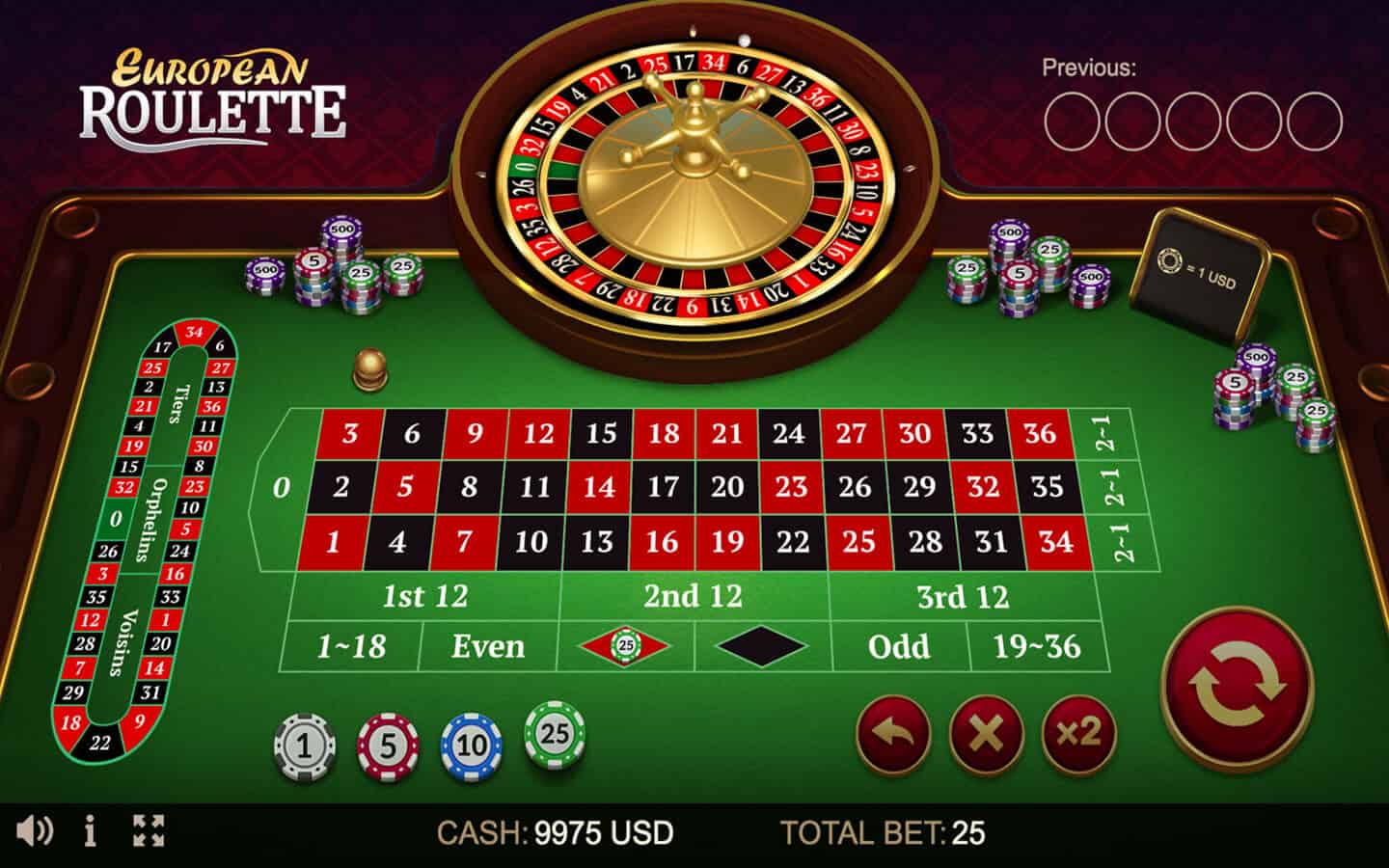
European Roulette wheel offers a timeless casino adventure built on the refined wheel, the green baize layout, and 37 numbered slots. The one zero provides the house a 2.70% advantage, producing a steady 97.30% RTP on all bets. Game mechanics revolves around guessing where the ball will land. We place chips on a felt layout that reflects the wheel, picking from inside bets on particular numbers or small clusters and outside bets including bigger sections such as red and black, odd or even, and high/low. Once wagers are set, the dealer turns the wheel and releases the ball; the result is pure chance with no further decisions.
Variance in roulette isn’t a fixed option but is determined by our betting plan. Single number bets on a individual number payout 35 to 1 but hit only once in 37 spins on average, generating high variance. Even-money bets such as red/black payout 1 to 1 and win about 48.65% of the time, producing low risk. A split bet covering two numbers sits in the middle. This means we can customize the risk amount ourselves, something not possible in a pre-configured slot. The La Partage rule, which gives back half the stake on 1-to-1 bets that lose to zero, raises the RTP on those stakes to 98.65%, among the highest returns in any casino game.
For slot players, this link is invaluable. When we see a slot with a 96% RTP and high volatility, we know the payout is back-loaded into uncommon, huge wins, comparable to placing direct bets again and again. A low-variance slot with the same RTP acts more like a period of equal money roulette bets, delivering common small wins that keep the balance ticking over. European Roulette consequently provides us a direct way to feel how bet selection changes the rhythm of a game, even before we play a slot.
How to Master European Roulette and Use RTP Awareness
Playing European Roulette is easy. We start by selecting a chip denomination and positioning it on the betting layout. We can choose as many positions as we like, mixing inside and outside bets to create a customized risk profile. Once the betting window shuts, the dealer spins the wheel and releases the ball. When the ball drops into a pocket, winning bets are awarded according to the fixed odds, and losing chips are collected. The whole process restarts, and we can modify our strategy between spins.
From an RTP standpoint, the most effective approach is to look for tables that feature the La Partage rule and focus on even-money outside bets. This pushes the return on those wagers to 98.65%, higher than almost any slot. If La Partage is not available, all bets give 97.30%, and the choice turns into one of volatility choice. We recommend starting with small outside bets to experience the rhythm of the game, then gradually trying inside bets if we are at ease with the increased variance.
Using this knowledge to slots means going past the headline RTP. Before we spin, we should examine the game’s volatility rating, the hit frequency, and the role of bonus features. Many providers now share detailed paytable information, featuring the maximum win and the RTP of each feature. We can use European Roulette as a mental anchor: if a slot’s base-game return is markedly lower than 97.30%, we understand that a large portion of the value is locked behind bonus triggers. That insight helps us determine whether the game suits our playing style.
- European Roulette RTP: 97.30% on all bets; 98.65% on even-money bets with La Partage.
- Slot RTP is a combined average of base-game and bonus-feature returns.
- High-volatility slots concentrate RTP in infrequent, large wins; low-volatility slots spread it across common small hits.
- Always consult the paytable for feature contributions and maximum win caps before playing a new slot.